I have a talk about senjafuda, paper seals marked with one’s name or pseudonym pasted at shrines and temples, originally as an act of devotion. The pasting later also became an act of self-promotion or as a contest against priests or other pasters (who can get their name to the highest point on the temple ceiling? and so on), and more stylish senjafuda were created specifically for trading and collecting.
Senjafuda pasted inside the Sazaedō in Aizuwakamatsu.
In the 1700s, a samurai named Hagino Kinai Nobutoshi went on pilgrimage on behalf of his lord’s brother, stricken with smallpox. He famously pasted many senjafuda at shrines and temples, legitimizing and popularizing the practice as a person of rank doing this in his official capacity.
In 2017 I traveled to Hopkinsville, Kentucky, which was the location of longest totality for the solar eclipse. You can read about how that went over at this post. But during this season of celestial event anticipation (we have another total eclipse happening this spring, this time in my backyard), I want to re-visit a story I told back then.
Totality
This tiny sliver of sun was still throwing strong shadows — or shade. Photographed through the telescope.
I’d seen partial solar eclipses before, but never totality, and wow. I’d read repeatedly that there is a real difference, and it’s true. The partial coverage was fun, especially as it advanced, when the sunlight got all weird like someone had screwed up the Photoshop brightness/contrast settings. You want to worry that you have eclipse blindness already (you don’t, it takes a day or two to show effects even if you stupidly stared directly into the sun), but it’s just the atmosphere refracting the reduced light.
Totality was a very trippy experience. The sun was SO BLACK, and my poor phone camera just wasn’t equipped to handle the contrast. Cicadas sang as twilight fell. I could see the corona with my naked eye. There was a 360-degree sunset. It was really cool, and not nearly long enough even at the country’s longest totality. (See the photos on the original post.)
I’m sad to be missing the eclipse this year, but at least I got to experience it in 2017!
Little Green Men
That eclipse trip prompted me to look up details on the alleged alien invasion in that area decades before.
On August 21, 1955 — yes, the 2017 solar eclipse date was an anniversary — 8 adults and 3 children reported an assault on their farmhouse by “little men” they claimed were extraterrestrials. (The color green was added in later media reports, and this may be the trope-namer for the phrase.) They fled to the Hopkinsville police station to ask for help, saying they’d been fighting the creatures for 4 hours.
The whole affair started when one of the men went out to retrieve water from the well. He saw a bright rainbow-colored light which he described as a flying saucer shoot overhead and land beyond a nearby treeline, hissing. He went inside and reported it to the family, who laughed at his tale — until not long after when the little men, with gangling arms, stumpy legs, and a swaying gait, approached the house and began to peer in through the windows.
I was in Kyōto. I was looking up something else on my phone and saw “Seimei Jinja” on the screen map, not too far from my ryokan. My metaphorical antennae immediately pricked, and I knew I had to make a detour.
If you’ve read my Kitsune Tales stories, you might remember Abe no Seimei as an important figure in Japanese folklore. He was a real person; we have plenty of documentation for his life. But it’s likely that not quite all of the feats and attributes said of him — being half human and half kitsune, binding 12 heavenly generals as servants, changing oranges into rats, etc. — are as historical.
Ceallaigh S. MacCath-Moran joins me for this month’s Learn With Me, sharing an academic discussion of folklore, fiction, responsibility in using story, the universality of motif, and conspiracy theories!
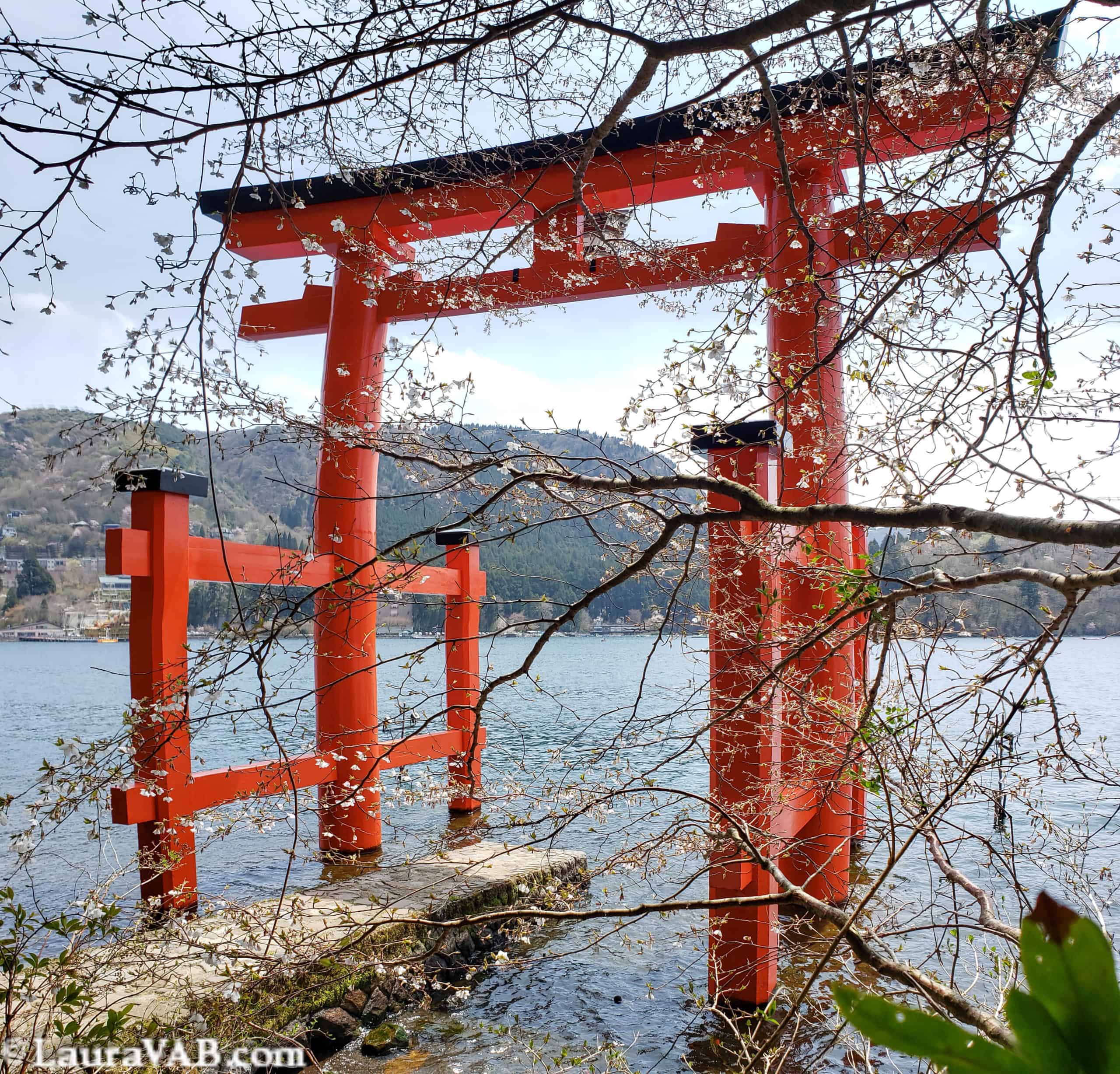
The iconic red gates mark the entrance to a shrine, defining a sacred space, but to many outside Japan they are most associated with Fushimi Inari Taisha, the famous shrine at Kyoto. While there are many fascinating aspects to explore here, the seemingly-endless red torii are a captivating visual and immediately recognizable all over the world.
Fushimi Inari Taisha (伏見稲荷大社) was founded in 711, on Inariyama (Mt. Inari) outside Kyoto. The main structure today dates to 1499 (but is regularly reconstructed, per tradition). Inari Ōkami is the Shinto spirit of rice and its related themes of sake and prosperity. For this reason, you will see donated sake near the shrines.
Throughout Shinto’s long history, Inari has been variously depicted as both male and female. While Susan Spann graciously guided me on my first visit to Fushimi Inari Taisha, we were amused by our distinct references in conversation—I kept referring to Inari as she, and Susan kept saying he, but really that makes sense when you remember that we write in different historical periods.
I’ve been thinking a lot about Japan lately. Just over a year ago I was on a dream trip through the country, visiting historic sites both famous and less touristy, and I am anxiously waiting for 2020 to play through to see if I can make my scheduled trip this fall, where I plan to hike the Kumano Kodō (熊野古道), a network of millennium-old pilgrimage trails through the south.
But while I wait, I’ve been reminiscing.
Author and Tōkyō resident Susan Spann was my guide to the best of Hakone, from the hotel where we were personally greeted to the little Italian restaurant where the owner brought in a wood-burning pizza oven. (Fair warning: I’m going to be talking up her books, both her historical mysteries about the murder-solving ninja/Catholic priest duo and her upcoming memoir about climbing 100 Japanese peaks in a year to change her inner and outer life.)
Today I am pleased to announce a new anthology full of rich, creamy, dieselpunk goodness.
Two young women defy the devil with the power of friendship. The pilot of a talking plane discovers a woman who transforms into a swan every night and is pulled into a much more personal conflict than the war he’s already fighting. A pair of twins with special powers find themselves in Eva Braun’s custody and wrapped up in a nefarious plan. A team of female special agents must destroy a secret weapon–the spindle–before it can be deployed, but when they discover one of their number has betrayed them, things get messy. The daughter of a gangster is being held hostage on the top floor of a hotel and, now unbeknownst to her, the secret that had been keeping her safe has been revealed and her time is running out. These and over a dozen other dieselpunk and decopunk fairy tales can be found in this anthology.
Retellings of The Little Mermaid, Hansel and Gretel, Rapunzel, Cinderella, The Monkey King, Swan Lake, Pinoccio and more are all showcased alongside some original fairy tale-like stories. Featuring stories by Alicia K. Anderson, Jack Bates, Patrick Bollivar, Sara Cleto, Amanda C. Davis, Jennifer R. Donohue, Juliet Harper, Blake Jessop, A.A. Medina, Lizz Donnelly, Nellie K. Neves, Wendy Nikel, Brian Trent, Alena Van Arendonk, Laura VanArendonk Baugh, Sarah Van Goethem, Robert E. Vardeman and Zannier Alejandra
Do you guys remember back when I talked about an urban fantasy featuring Japanese youkai in the American northwest? K. Bird Lincoln’s Dream Eater was a fun ride featuring one of the less popularized youkai and Native American entities as well, in the fun setting of Portland. (Fun… The Portland Haifu has a new novelette out
Need an autumn read (or a spring read, for my southern hemisphere friends)? Today a writer friend’s book is free, so I’m helping to spread the word. From the tragedy of The Little Mermaid, and the mystery of 20,000 Leagues Under the Sea, comes the truth that ties… The Last Will and Testament of Captain Nemo