Skip to content

An Adventure on Fuji-san

On relatively short notice (just less than a month), I decided with two friends to climb Mt. Fuji.

This wasn’t quite as ridiculous as it sounds. I had traveled with these friends in Japan before, specifically for a week of mountain hiking on the Kumano Kodō. While I live in a former swamp at just 400 feet above sea level, I know from other hikes that I handle altitude well enough to transition quickly. So I hopped a plane and burned some miles to Tōkyō.

But I didn’t land and immediately start hiking; I love visiting Japan, and we made a few stops first.

An Adventure on Fuji-san
well with a five-pointed star

Abe no Seimei and Seimei Jinja

I was in Kyōto. I was looking up something else on my phone and saw “Seimei Jinja” on the screen map, not too far from my ryokan. My metaphorical antennae immediately pricked, and I knew I had to make a detour.

If you’ve read my Kitsune Tales stories, you might remember Abe no Seimei as an important figure in Japanese folklore. He was a real person; we have plenty of documentation for his life. But it’s likely that not quite all of the feats and attributes said of him — being half human and half kitsune, binding 12 heavenly generals as servants, changing oranges into rats, etc. — are as historical.

Abe no Seimei and Seimei Jinja

Fushimi Inari Taisha

Fushimi Inari Taisha (shrine)

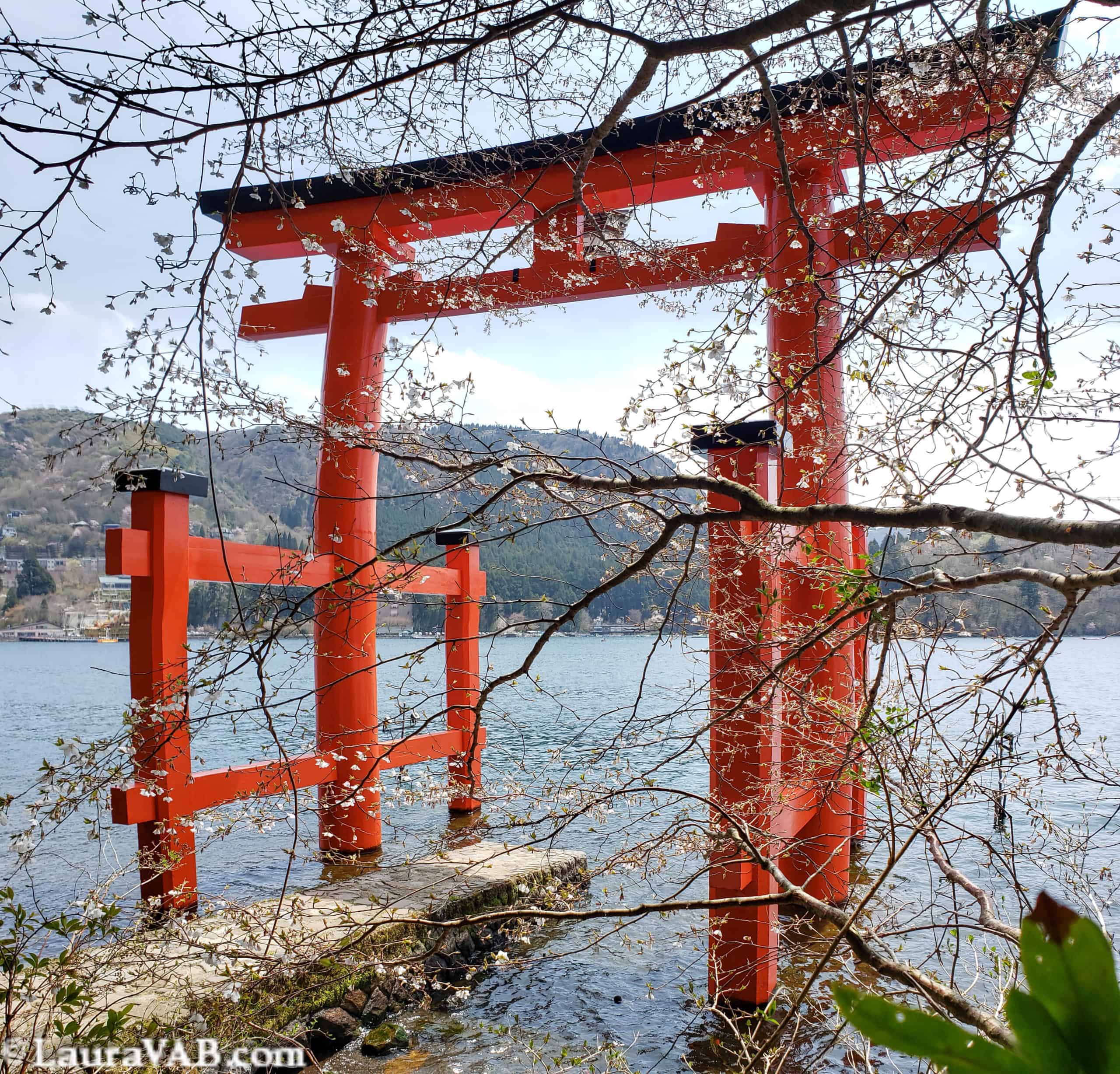
The iconic red gates mark the entrance to a shrine, defining a sacred space, but to many outside Japan they are most associated with Fushimi Inari Taisha, the famous shrine at Kyoto. While there are many fascinating aspects to explore here, the seemingly-endless red torii are a captivating visual and immediately recognizable all over the world.

Fushimi Inari Taisha (伏見稲荷大社) was founded in 711, on Inariyama (Mt. Inari) outside Kyoto. The main structure today dates to 1499 (but is regularly reconstructed, per tradition). Inari Ōkami is the Shinto spirit of rice and its related themes of sake and prosperity. For this reason, you will see donated sake near the shrines.

Throughout Shinto’s long history, Inari has been variously depicted as both male and female. While Susan Spann graciously guided me on my first visit to Fushimi Inari Taisha, we were amused by our distinct references in conversation—I kept referring to Inari as she, and Susan kept saying he, but really that makes sense when you remember that we write in different historical periods.

Fushimi Inari Taisha

Kuro-Tamago (Black Eggs)

I’ve been thinking a lot about Japan lately. Just over a year ago I was on a dream trip through the country, visiting historic sites both famous and less touristy, and I am anxiously waiting for 2020 to play through to see if I can make my scheduled trip this fall, where I plan to hike the Kumano Kodō (熊野古道), a network of millennium-old pilgrimage trails through the south.

But while I wait, I’ve been reminiscing.

Author and Tōkyō resident Susan Spann was my guide to the best of Hakone, from the hotel where we were personally greeted to the little Italian restaurant where the owner brought in a wood-burning pizza oven. (Fair warning: I’m going to be talking up her books, both her historical mysteries about the murder-solving ninja/Catholic priest duo and her upcoming memoir about climbing 100 Japanese peaks in a year to change her inner and outer life.)

But today, let’s just talk about Ōwakudani.

Kuro-Tamago (Black Eggs)
Hunter's Gambit by Brandy Ackerley

Hunter’s Gambit reveal with Brandy Ackerley

Today I’m pleased to welcome Brandy Ackerley to the blog! I first met Brandy a few years ago at a writers conference in Calgary, Alberta and knew immediately she had good taste because she told me how much she’d enjoyed Kitsune-Tsuki. /wink/ We got to talking about everything from fox youkai to writing to art (she’s way better than I am), and now I’m pleased to host the reveal of her debut novel’s cover!


Hello and welcome! My name is Brandy Ackerley and I’m taking over this blog with some very important news! My first novel will be coming out a month from now on March 15th and I am super stoked about it. As a fan of Laura’s novels, I am honoured that she’s letting me reveal its cover on here!

Hunter’s Gambit is the story of Kuzunoha’s quest to find freedom from the future her family has decided for her. Unfortunately, she’s running out of options, especially after her elder half-sister, Himiko, takes her place as family matriarch. That changes when she saves the life of a stranger…

Hunter’s Gambit reveal with Brandy Ackerley
Reconstruction of the nyonindo or women's hall on Koya

Trial on Mount Koya

Trial on Mount Koya by Susan SpannToday is the release date for Trial on Mount Koya by Susan Spann, which is what happens when you put Agatha Christie in a blender with shogunate Japan and add a seasoning of ninja.

I had a chance to see this one in advance and I read it in a single sitting. It’s your iconic scenario of a group trapped together without escape (here, in an ancient Buddhist temple atop a sacred mountain) while one of them kills off the others one by one (and in this case, poses the corpses like the Buddhist judges of hell). The race is on to find the killer before he murders the entire cast.Trial on Mount Koya