Skip to content
a man and women snuggle beneath bedding in a high-end brothel of the yoshiwara

Art of the Ukiyo, the Floating World

This entry is part 5 of 17 in the series GDB & Route 66

Living only for the moment, turning our full attention to the pleasures of the moon, the snow, the cherry blossoms, and the maple leaves; singing songs, drinking wine, diverting ourselves in just floating, floating… refusing to be disheartened, like a gourd floating along with the river current: this is what we call the floating world.

Asai Ryoi, Tales of the Floating World, approx. 1666

Once “the floating world” referred to the Buddhist concept of detachment, but by the 17th century it had come to mean a hedonistic approach to life’s pleasures.

“In the Buddhist context, ‘ukiyo’ was written with characters that meant ‘suffering world,’ which is the concept that desire leads to suffering and that’s the root of all the problems in the world,” according to Laura W. Allen, the Asian Art Museum‘s curator of Japanese art. “In the 17th century, that term was turned on its head and the term ‘ukiyo’ was written with new characters to mean ‘floating world.’ The concept of the floating world was ignoring the problems that might have existed in a very strictly regulated society and abandoning yourself, bobbing along on the current of pleasure.” A creative boom developed in the “pleasure district” of the yoshiwara in Edo (today Tokyo), amid the tea houses and the theaters and the brothels.

looking up at the cables of the Golden Gate Bridge
It is an impressive bridge.

The Asian Art Museum in San Francisco has a special exhibit on ukiyo-e, images of the floating world, so after a brisk walk across the Golden Gate Bridge and back, just to say I did, I made a visit. And I took pictures.

Art of the Ukiyo, the Floating World
road snaking through giant redwoods

Hiking the Redwoods

This entry is part 4 of 17 in the series GDB & Route 66

In an attempt to distract myself after returning Mindy, I used the next day to go over training homework and then I took myself hiking. And I made sure to find some sequoias, because we don’t have those at home.

two tiny lumberjacks beside enormous chestnut trees
the American Chestnut tree was typically enormous and grand

We used to have amazing trees in the Midwest, too. Accounts remain of nuts lying too thickly to reach through to the ground, and we have photos of trees with diameters of 12 and 15 feet. But we logged many of them before the lumbermen ever got to California. (The rest died when we imported non-native species, releasing the disastrous chestnut blight.)

Laura in hat before redwood bark, in selfie mode
My arm is just not long enough for a selfie with a redwood.

Midwestern conditions allowed our trees to reach incredible size in just a couple hundred years. The redwoods are much longer lived, though, a full four digits of years, which demands another level of respect.

Hiking the Redwoods
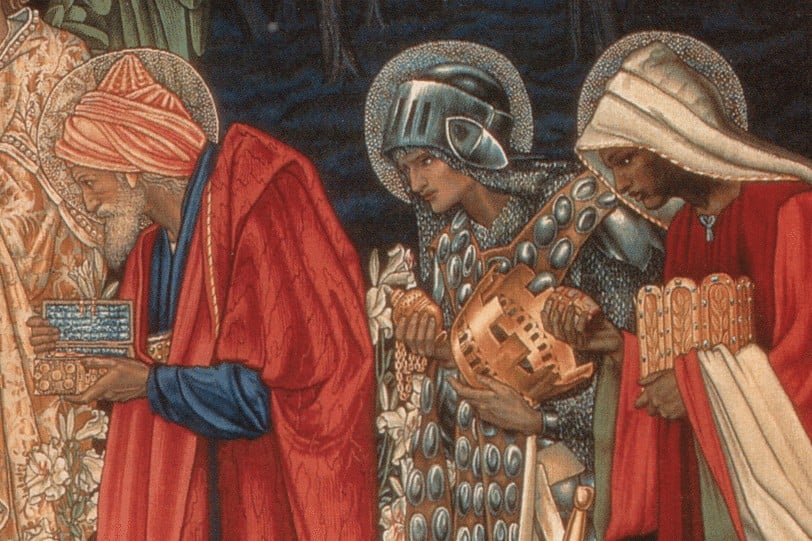
Detail of the Three Kings from The Adoration of the Magi, tapestry, by Edward Burne Jones

Songs of the Little Drummer Boy

Detail of the Three Kings from The Adoration of the Magi, tapestry, by Edward Burne Jones

Last time I talked about the weird appearances of Little Drummer Boy figurines in Nativity scenes and the fascinating historical research I got to do for So To Honor Him. Today I’m going to talk about the obligatory soundtrack for the book: “The Carol of the Drum” or “The Little Drummer Boy,” depending on when it was recorded and by whom.

I’m not even going to try to list here all the myriad covers of this song, or even just the better ones. I’ll simply point out some really stand-out or significant recordings and explain why I think they deserve a mention. I know I’m leaving out a lot of favorites; feel free to comment with a plug for your choice!

Songs of the Little Drummer Boy
So To Honor Him book cover, three riders on camels against a dramatic sky, with a brilliant star, and a super-imposed drum

So To Honor Him – a tale of the drummer boy

Garishly-dressed drummer boy with Italian Greyhound.
This is more than a bit ugly. And why does he come with a dog?

Lots of history today.

Maybe it’s always been there, but a few years ago I started noticing a curious trend of Drummer Boy figures in Nativity sets. Had the carol become so prominent in our Christmas traditions that we were now including the recent and wholly fictional character in depictions of the scene? And why were so many of them oddly inappropriate to the setting? I was simultaneously a little weirded out and a little intrigued.

I’d always liked “The Carol of the Drum” at least a bit. It’s simple and not terribly authentic, but it’s got a decent message (“your best is your gift”) and anyway it’s catchy, pa-rum-pum-pum-pum. It was only written in 1941, allegedly based on a similar Czech song but the original (according to Wikipedia, anyway) has never been found. It probably has more to do with the carol “Patapan.”

It became hugely popular after the Von Trapp family (of The Sound of Music fame) recorded it and Harry Simeone recorded it two or three times, renaming it “The Little Drummer Boy.”

K.K. Davis’ original “Carol of the Drum” (Photo credit: Wikipedia)

So I’d always enjoyed the song. But it bothered me. I mean really, who plays a drum for a baby? Most of my time around infants is filled with admonishments to make no noise, lest we wake the sleeping screamer. I know people who even travel with white noise machines for their young children (too much). And how did the Wise Men happen across a renegade drummer from an anachronistic military band? Because that’s how the kid is usually depicted in illustrations. And where are his parents, anyway?

If you want skip ahead to the story, jump to the bottom of the page.
If you want to hear about the research, read on for a bit.

This has bothered me off and on for years. And then I found my brain starting to do something about it. Where did this kid with the drum come from?

So To Honor Him – a tale of the drummer boy
Facebook FAE launch party, July 22, 2014, 6-9 pm EDT

FAE releases today!

Fae

Today’s the day! Fae officially releases, with my story “And Only the Eyes of Children.”

If you’ve got a few minutes, please drop by the online release party tonight, from 7-10 pm EDT. It’s easy — it’s right on Facebook, no additional sign-in or contact info required — and there will be a lot of fun stuff going on, from giveaways to real-life fairy doors to recipes to a short history of Hoosier cuisine. I’ll even be giving away two Kitsune Tales books!

And just in case you’ve somehow missed why I’m so excited about this….

FAE releases today!

Interview at Letters from Annie

Today I can share with you a nifty interview about the Kitsune Tales series over at the blog of Annie Douglass Lima. She’s running a series called “Realm Explorers” about worlds built in fantasy (or fantastic history, as in this case), which is a pretty fun idea. Hop… Interview at Letters from Annie

Fae

FAE pre-order and release party!

Fae

Just a note…. I’ve had a number of questions about obtaining Fae, the anthology of fairy, and now there’s a simple answer: You can pre-order it here, in paperback or ebook.

Of course it will also be on Amazon, Barnes & Noble, Kobo, and a gazillion other sites (and your favorite independent store can easily order it, if they don’t already have it stocked).

Have I mentioned that Fae includes one of my favorite short stories?

FAE pre-order and release party!
Fae

Cover Reveal: FAE

illustration from a book of fairy tales, the t...
illustration from a book of fairy tales, the tale is “Childe Roland” (Photo credit: Wikipedia)

You’ve probably heard of the survival of the fittest? It’s where things first broke down. An immortal doesn’t have to be fit for anything; he’s going to survive anyway. Immortality was evolution’s biggest screw-up, and any ecosphere worth its salt is going to do its best to make sure an immortal never breeds.

But they try.

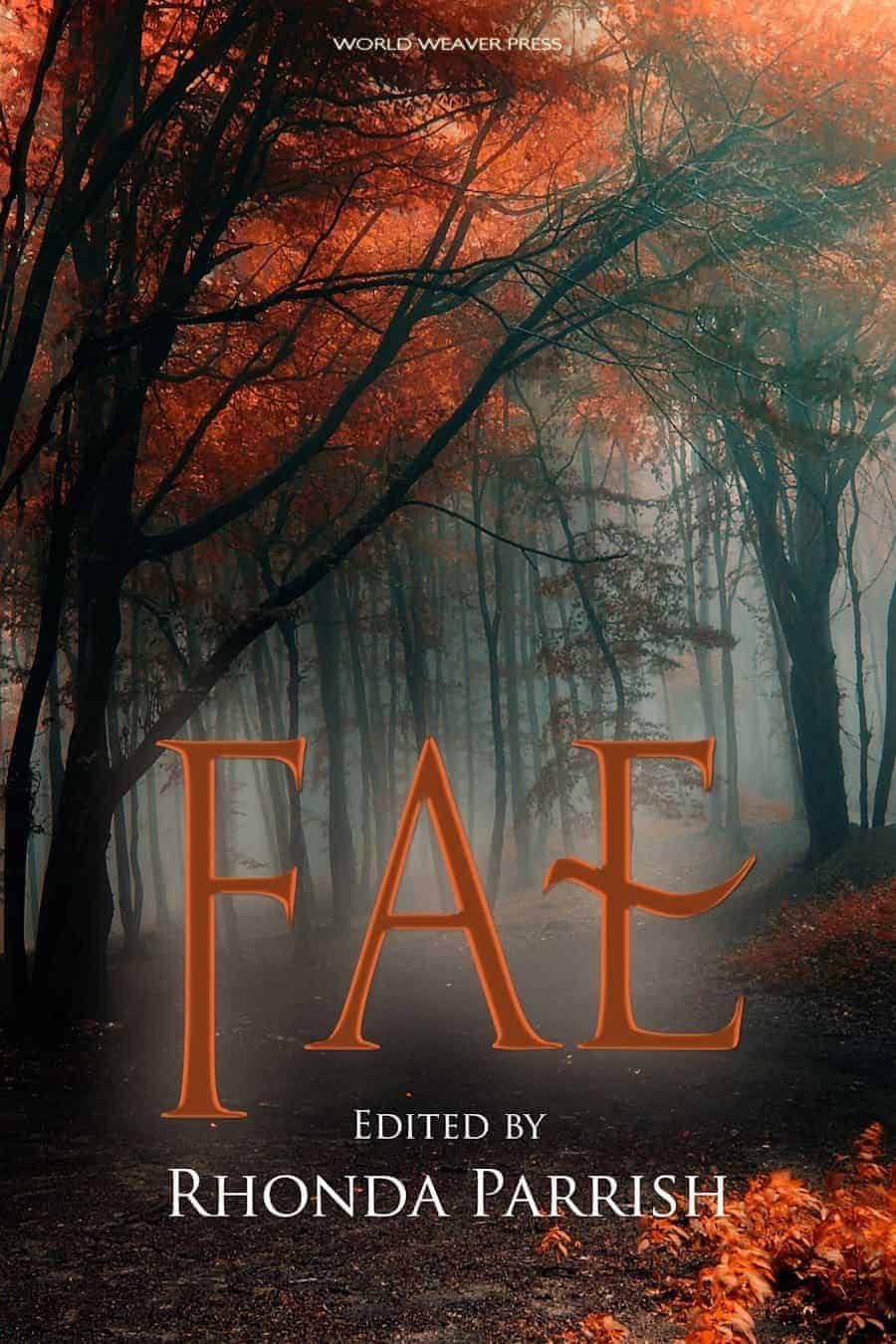
This is the opening of “And Only the Eyes of Children,” my urban fantasy short appearing in Fae. Fae is an anthology edited by Rhonda Parrish, full of fairy tales quite unlike traditional nursery stories.

It’s a pretty cool book, I’m really looking forward to it, and today I get to share the cover with you! Also, a contest, because we want to.

Ready?

Cover Reveal: FAE