Skip to content
Historic Route 66, main and 1920s alignment directions

Route 66: Notes From the Mother Road

This entry is part 11 of 17 in the series GDB & Route 66

I’m behind in updating the actual travelogue for a number of reasons, not least of which is the photo-intensity of this trip, making backups and postings at typical hotel/motel speeds fairly draggy. While many old roadside motels are wonderful and equipped with all the modern conveniences, like the Roadrunner Lodge in Tucumcari, NM, others are not.

(One night I pulled in and asked first about internet access and second about vacancy. The owner/manager promised we would have internet. That turned out to be true only if I sat on the sidewalk outside the office, and even then my photo upload predicted it would finish at 8:16 the following morning.)

But there are a few notes common to all of Route 66 which I can share outside of chronological order.Route 66: Notes From the Mother Road

Route 66 icon painted on street in front of mural of girl in flatbed ford and bronze statue

Route 66: Arizona, part 1

This entry is part 10 of 17 in the series GDB & Route 66
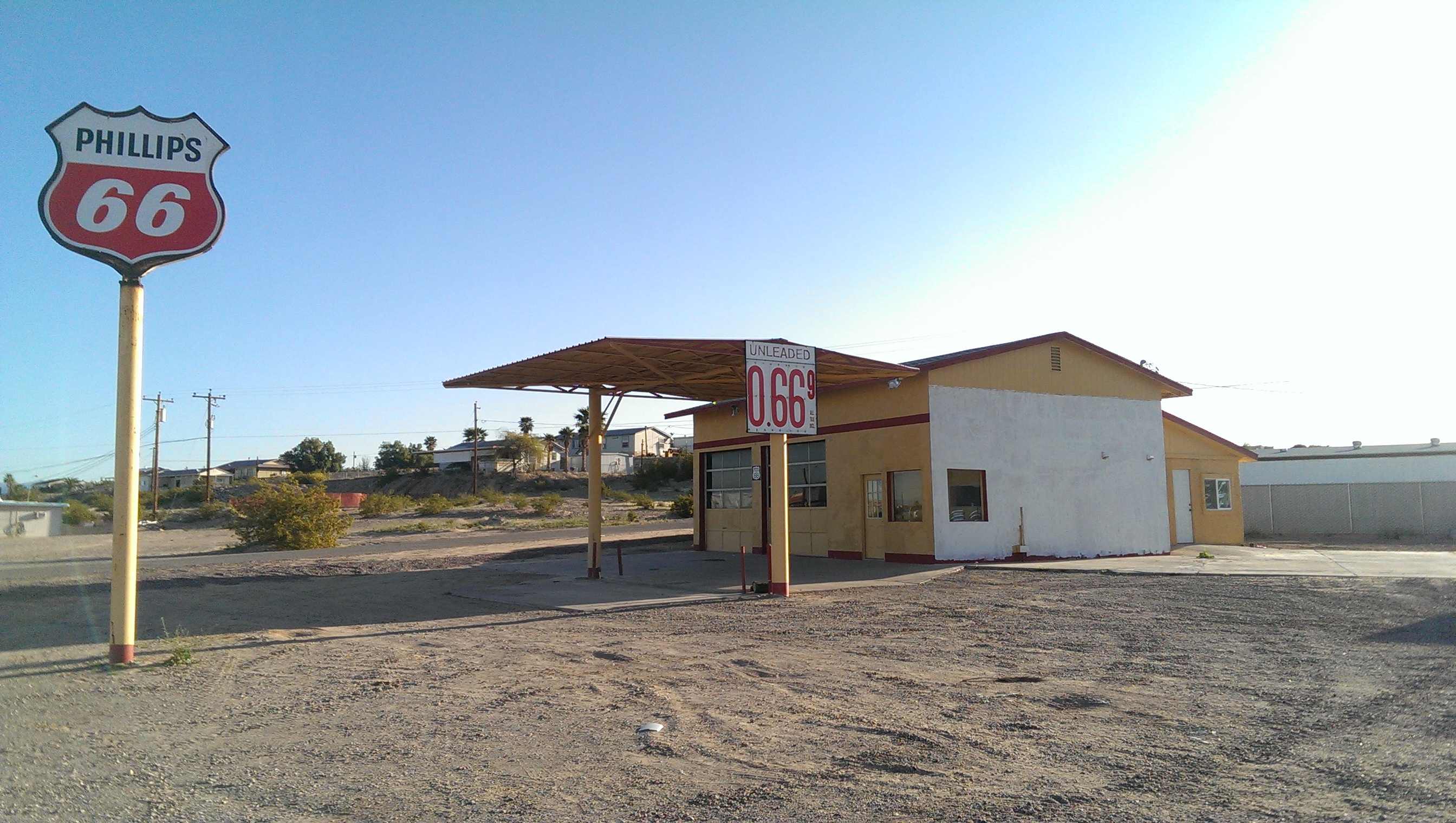
old filling station, gas at 66 cents
a restored Phillips 66 station

Remember, I’m reporting Route 66 from west to east, which is atypical. (I even found one guide which said running Route 66 from LA to Chicago was “historically wrong.” Like the whole highway was just a 2,400-mile one-way road.)

So here’s Arizona, from sunset to sunrise.

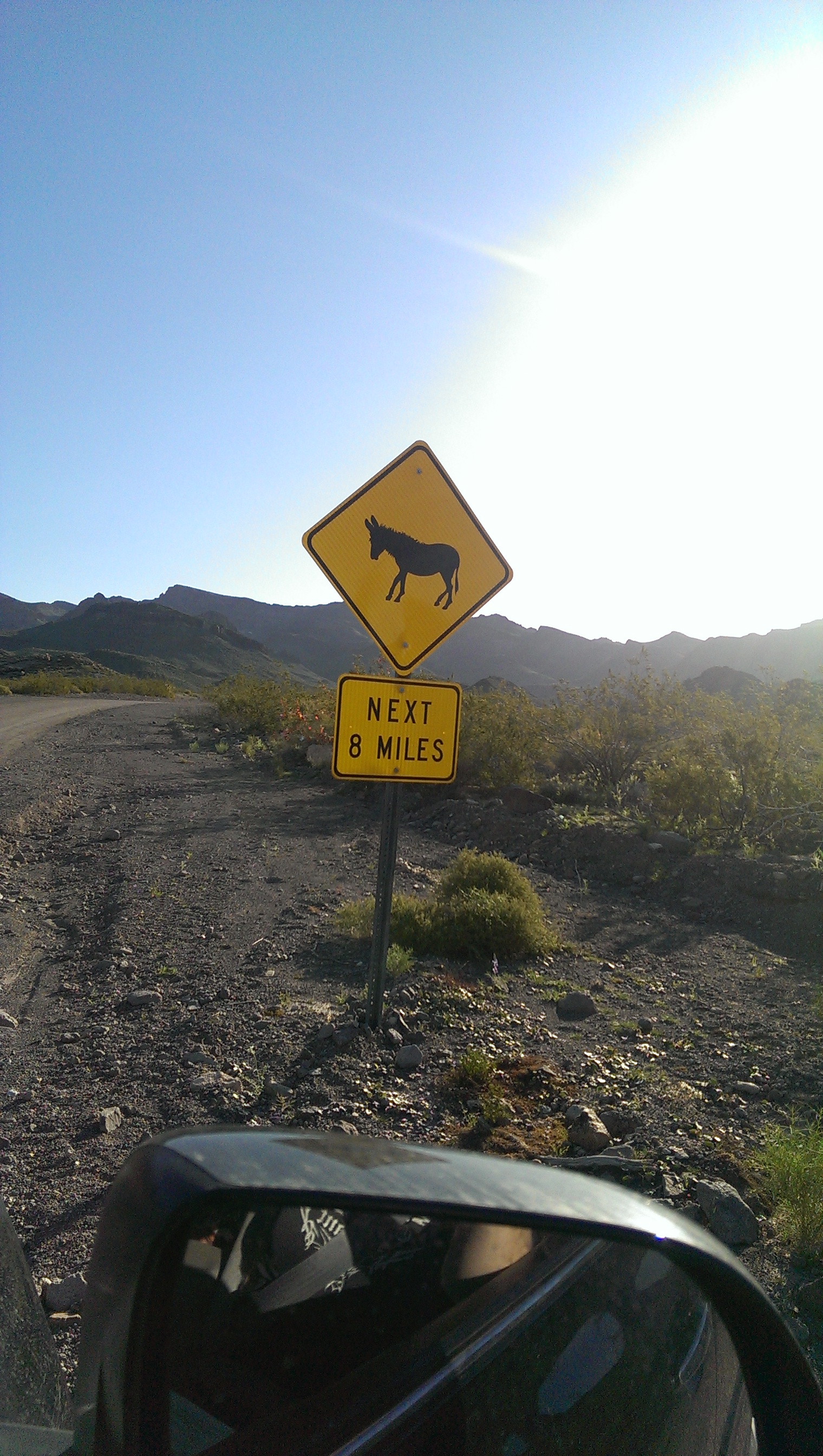
caution traffic sign, BurrosA Dearth of Burros

Oatman is famous for its feral burro population, descended from those escaped from or turned loose by prospectors in the (very rich) mining area. Tourists feed the burros, which wander down the street freely.

We arrived at Oatman early, and we shopped and we had breakfast, and….

Route 66: Arizona, part 1
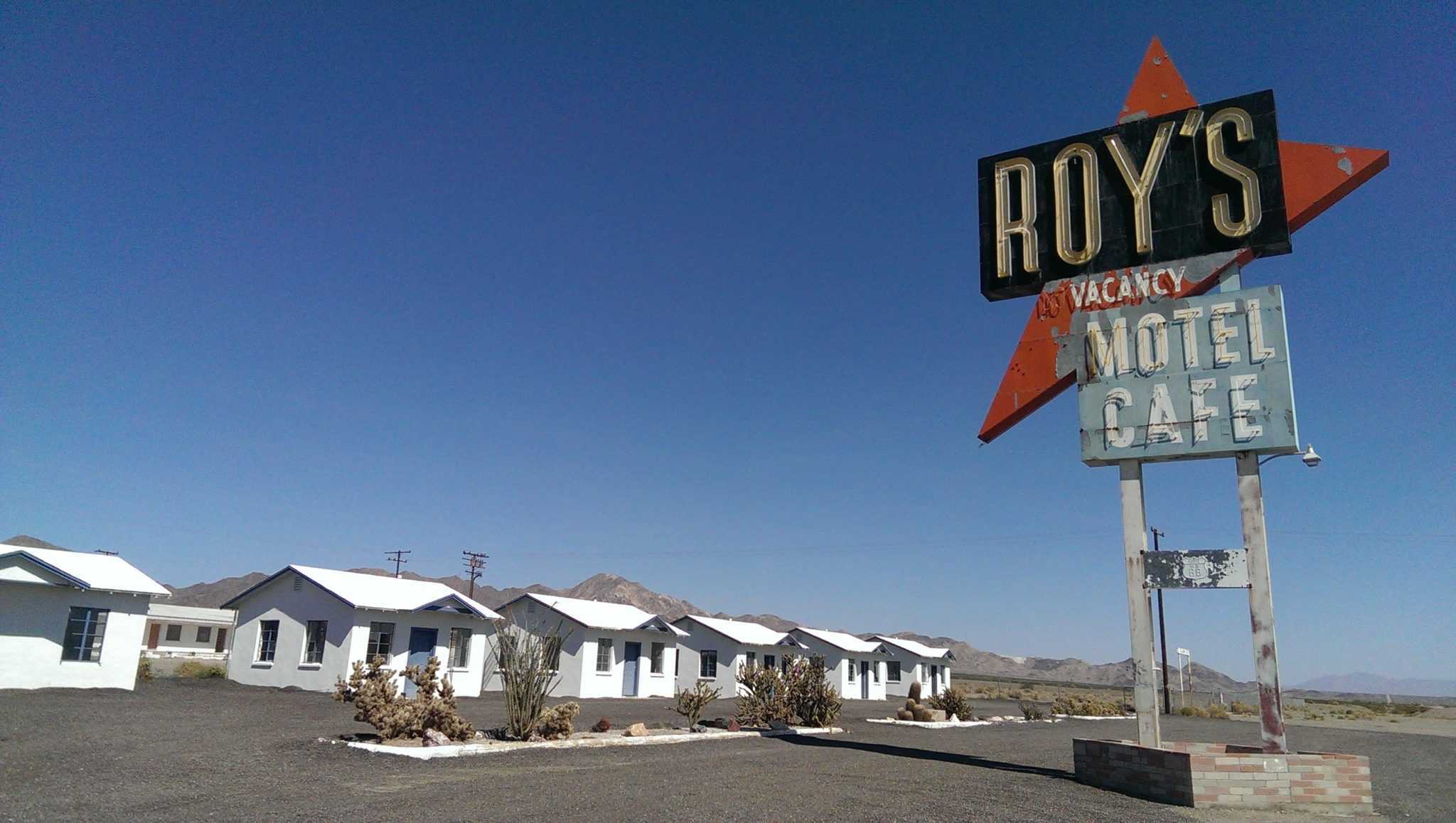
Roy's iconic sign over the decaying cabins

Route 66: Amboy and Roy’s Cafe

This entry is part 9 of 17 in the series GDB & Route 66

Though I’ve written about Route 66 in California before, I’ve decided to give Amboy and Roy’s their own post.

Then

Roy's iconic sign over the decaying cabins

When I did this trip with my parents and sister in ’98, we came west through the Mojave Desert in a 113-degree day and stopped, as all do, at Roy’s Cafe.

Roy’s Motel and Cafe has an iconic sign and a desolate setting. When we entered, there were only the two employees and a middle-aged woman customer. We ordered drinks and burgers, and we discovered that the woman had been traveling with her husband and son, and they’d had car trouble in the desert. The two men had decided to go after a necessary car part, and they’d left her at Roy’s while they drove out for it. They were supposed to have returned two hours before.

Now, this story made little sense. If the car could make it to the next auto parts store, why not just go on to it? Why leave her somewhere which required hours of backtracking to collect her again?

Route 66: Amboy and Roy’s Cafe
rutted tracks in a dirt road

Route 66: California

This entry is part 8 of 17 in the series GDB & Route 66

Here’s a bit of Route 66 background, if you’re coming in late. If you’re all caught up, start the journey below!

The Drive

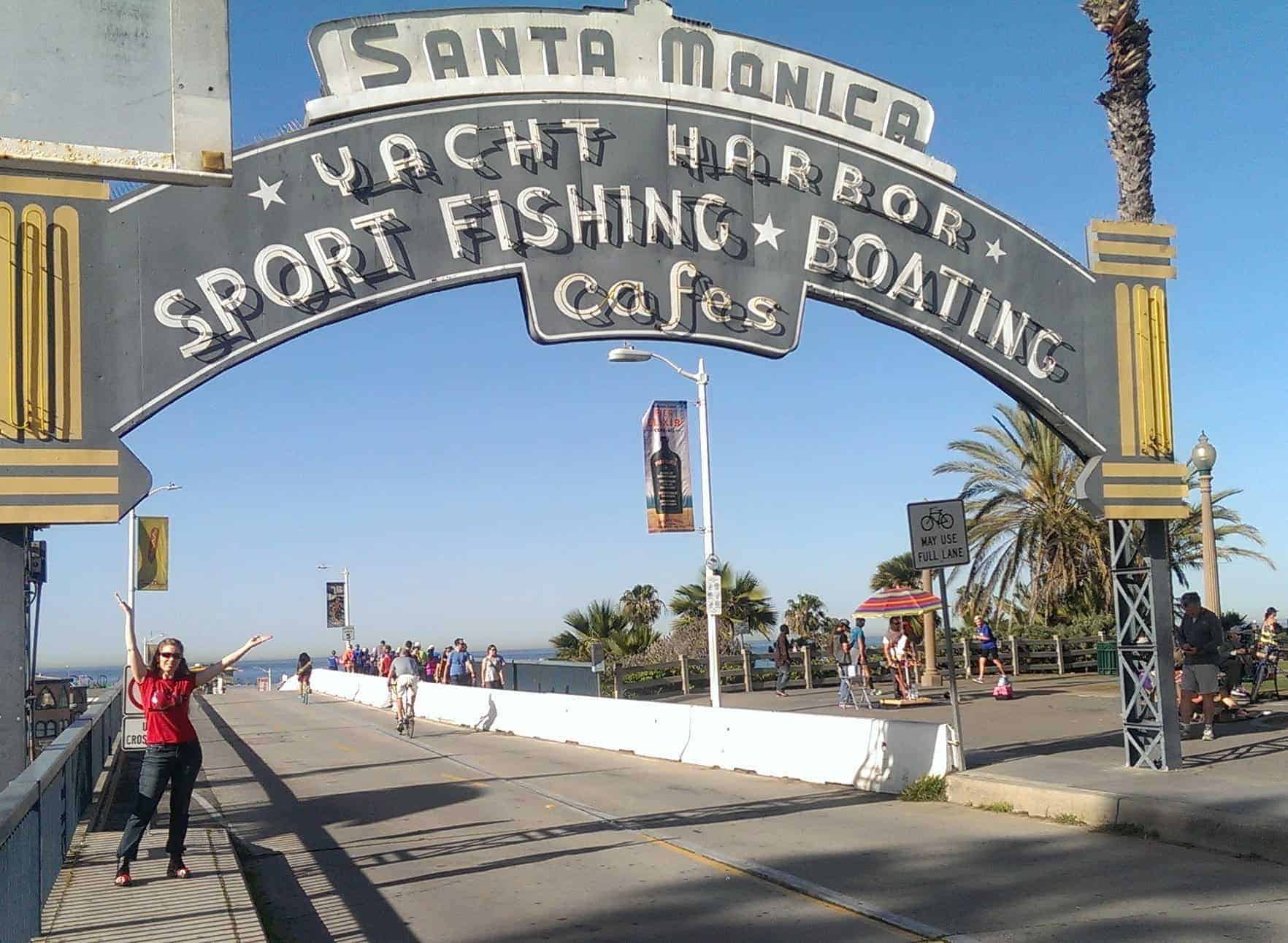
Santa Monica pier

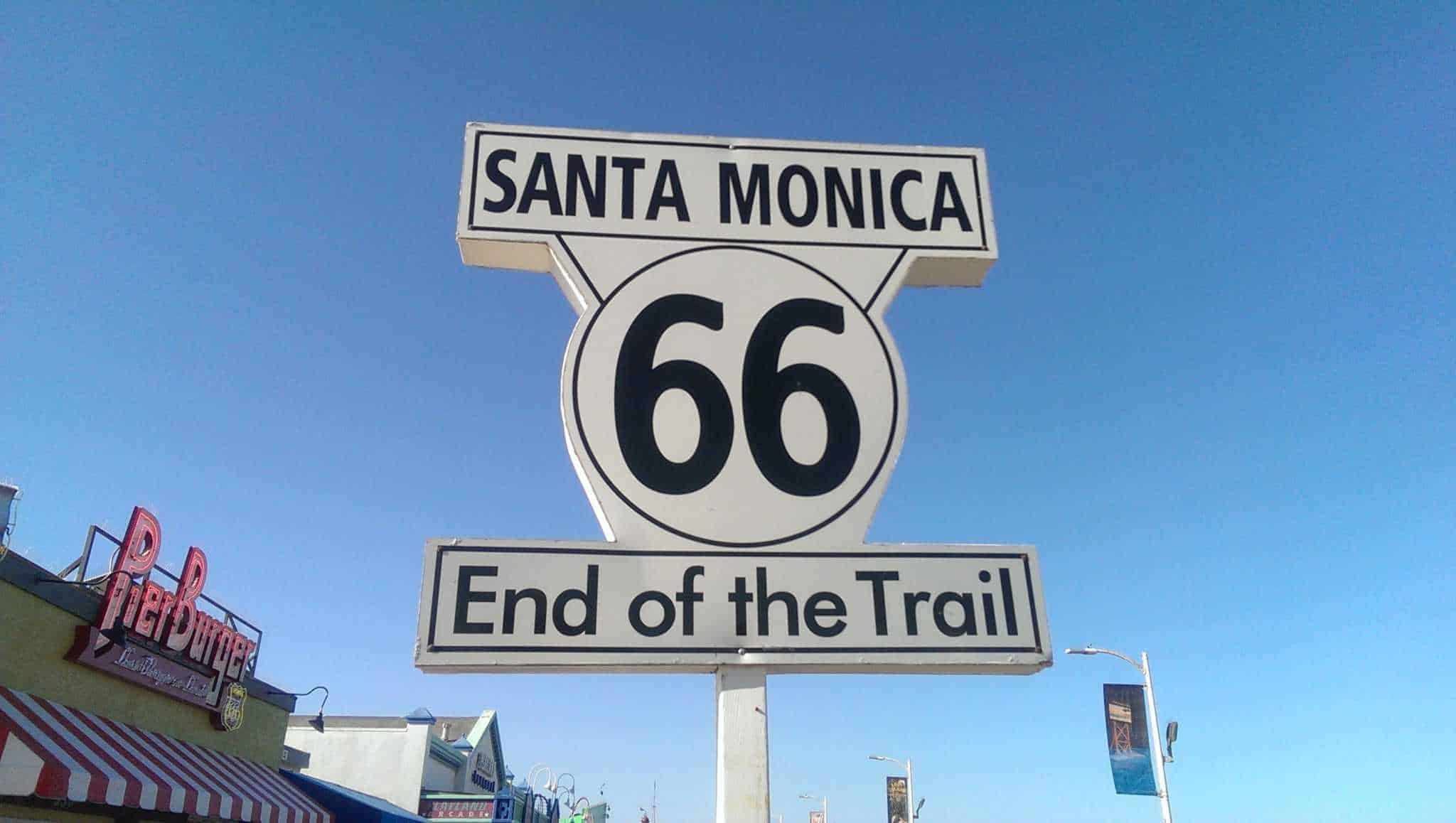
My plan was to drop Mindy at Guide Dogs for the Blind and then take Route 66 back to the Midwest. We started from Los Angeles to run eastward. The actual official end of the road, a couple blocks from the coast, is rather boring, so everyone collaboratively declares Santa Monica Pier to be the figurative end.

Route 66 "End of the Trail" sign on the Santa Monica Pier
Route 66: California
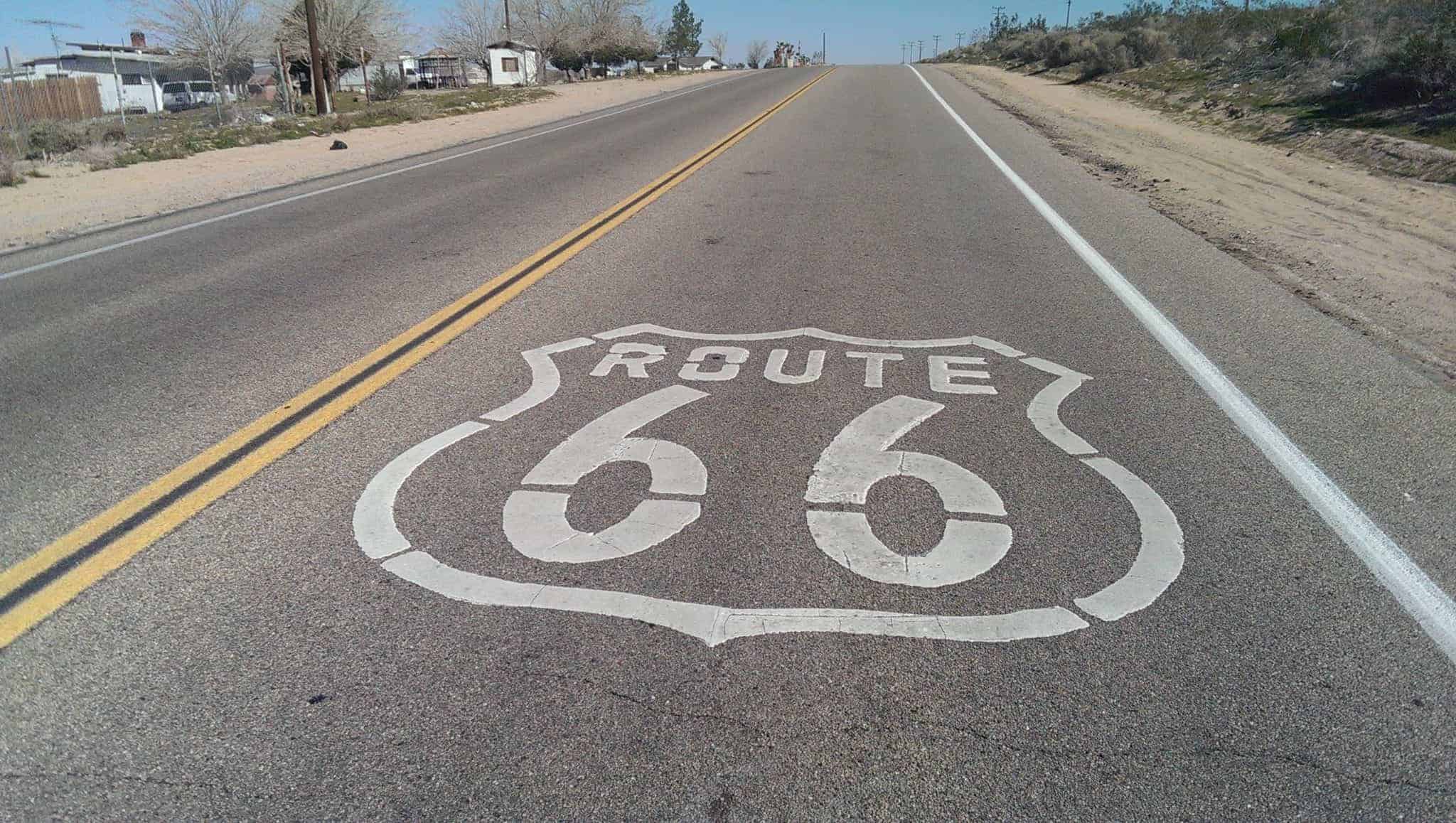
painted Route 66 icon on cracked pavement into horizon

Route 66: The Mother Road, The Road of Dreams

This entry is part 7 of 17 in the series GDB & Route 66

painted Route 66 icon on cracked pavement into horizonRoute 66 was the first transcontinental highway, opened in 1926. Depending on the year and route you chose to travel, it was somewhere between 2,200 and 2,500 miles to run from Chicago to Los Angeles. It became (in)famous during the migrations from the Dustbowl, when over 200,000 left their failing farms and headed west looking for other work. (Most returned within a few months; some found farm or highway or other work, but generally California wasn’t hospitable to the refugees.)

The coming of the interstate did unkind things to the road towns, many of which depended on serving travelers (shippers, migrants, tourists) for their livelihoods. Route 66 was finally de-certified in 1985, and the road was thought dead.

It wasn’t.Route 66: The Mother Road, The Road of Dreams

rocky Pacific coast along Highway 1

Highway 1 and Elephant Seals

This entry is part 6 of 17 in the series GDB & Route 66

I picked up my husband at the San Jose airport, and we headed south. And because this trip is about the journey, not about getting there — wherever “there” is — in a hurry, we of course took Highway 1.

Pacific surf crashing against sand at the base of cliffs
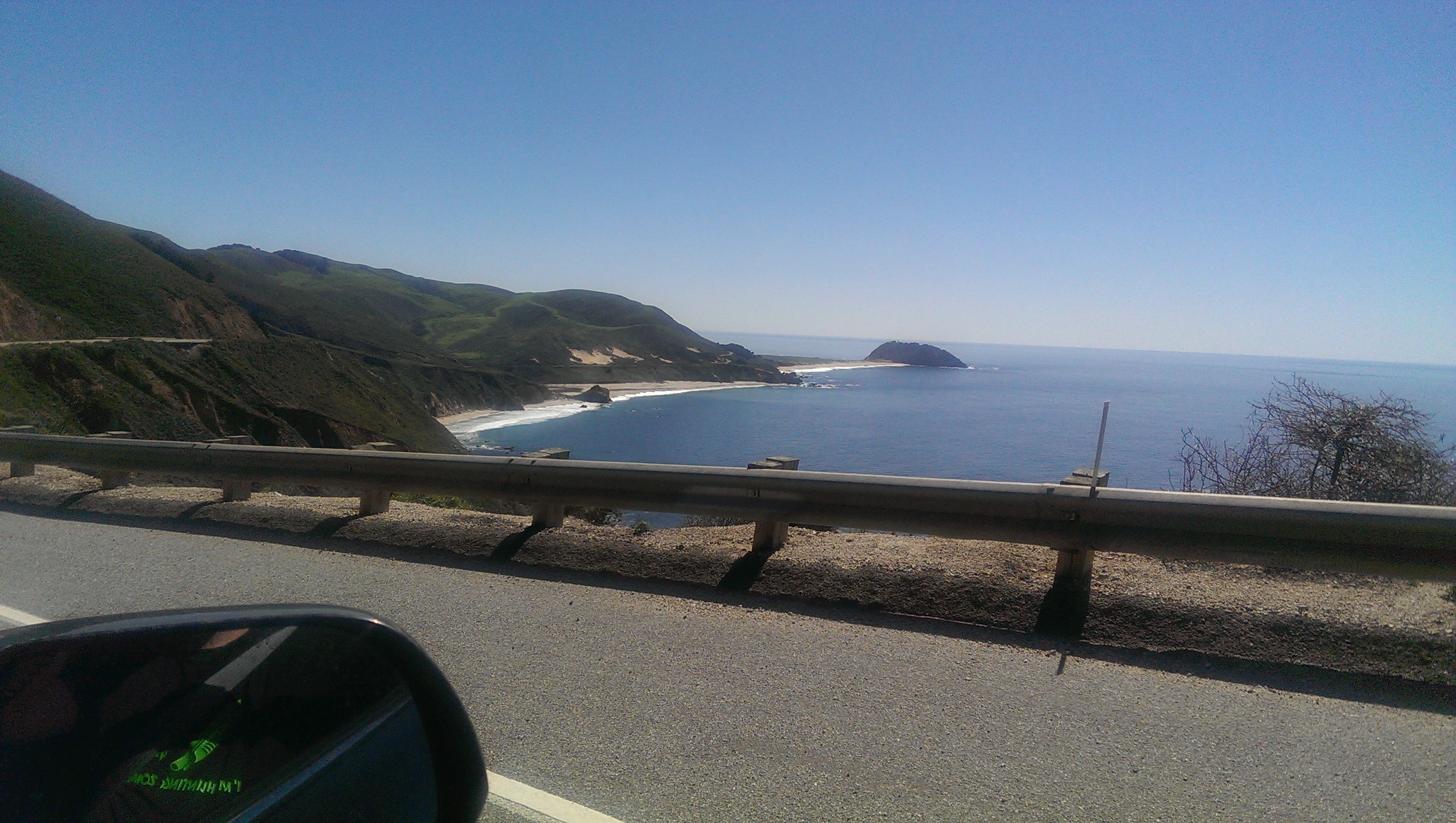
a typical high view of Highway 1 coast

Highway 1’s most famous stretch is of course the rocky cliffs and surf between Santa Cruz and Los Angeles. It’s all tight turns and steep climbs and drops along rocky beautiful Pacific coast.

I’d totally forgotten we’d pass San Simeon and Hurst Castle; we didn’t stop because it really deserves a full day, not a quick drive-by. Another time.

Apainted sign offering avocados, 7 for $1nd I was flabbergasted — yes, flabbergasted — by this roadside stand’s prices for produce. Because at home, I get all giddy when avocados go on sale for $1 each, which is an usually great deal. Oh California dwellers, how can you stand this avocado bounty? Are you properly appreciative?
But the highlight of our drive was the accidental discovery of the elephant seals.Highway 1 and Elephant Seals

a man and women snuggle beneath bedding in a high-end brothel of the yoshiwara

Art of the Ukiyo, the Floating World

This entry is part 5 of 17 in the series GDB & Route 66

Living only for the moment, turning our full attention to the pleasures of the moon, the snow, the cherry blossoms, and the maple leaves; singing songs, drinking wine, diverting ourselves in just floating, floating… refusing to be disheartened, like a gourd floating along with the river current: this is what we call the floating world.

Asai Ryoi, Tales of the Floating World, approx. 1666

Once “the floating world” referred to the Buddhist concept of detachment, but by the 17th century it had come to mean a hedonistic approach to life’s pleasures.

“In the Buddhist context, ‘ukiyo’ was written with characters that meant ‘suffering world,’ which is the concept that desire leads to suffering and that’s the root of all the problems in the world,” according to Laura W. Allen, the Asian Art Museum‘s curator of Japanese art. “In the 17th century, that term was turned on its head and the term ‘ukiyo’ was written with new characters to mean ‘floating world.’ The concept of the floating world was ignoring the problems that might have existed in a very strictly regulated society and abandoning yourself, bobbing along on the current of pleasure.” A creative boom developed in the “pleasure district” of the yoshiwara in Edo (today Tokyo), amid the tea houses and the theaters and the brothels.

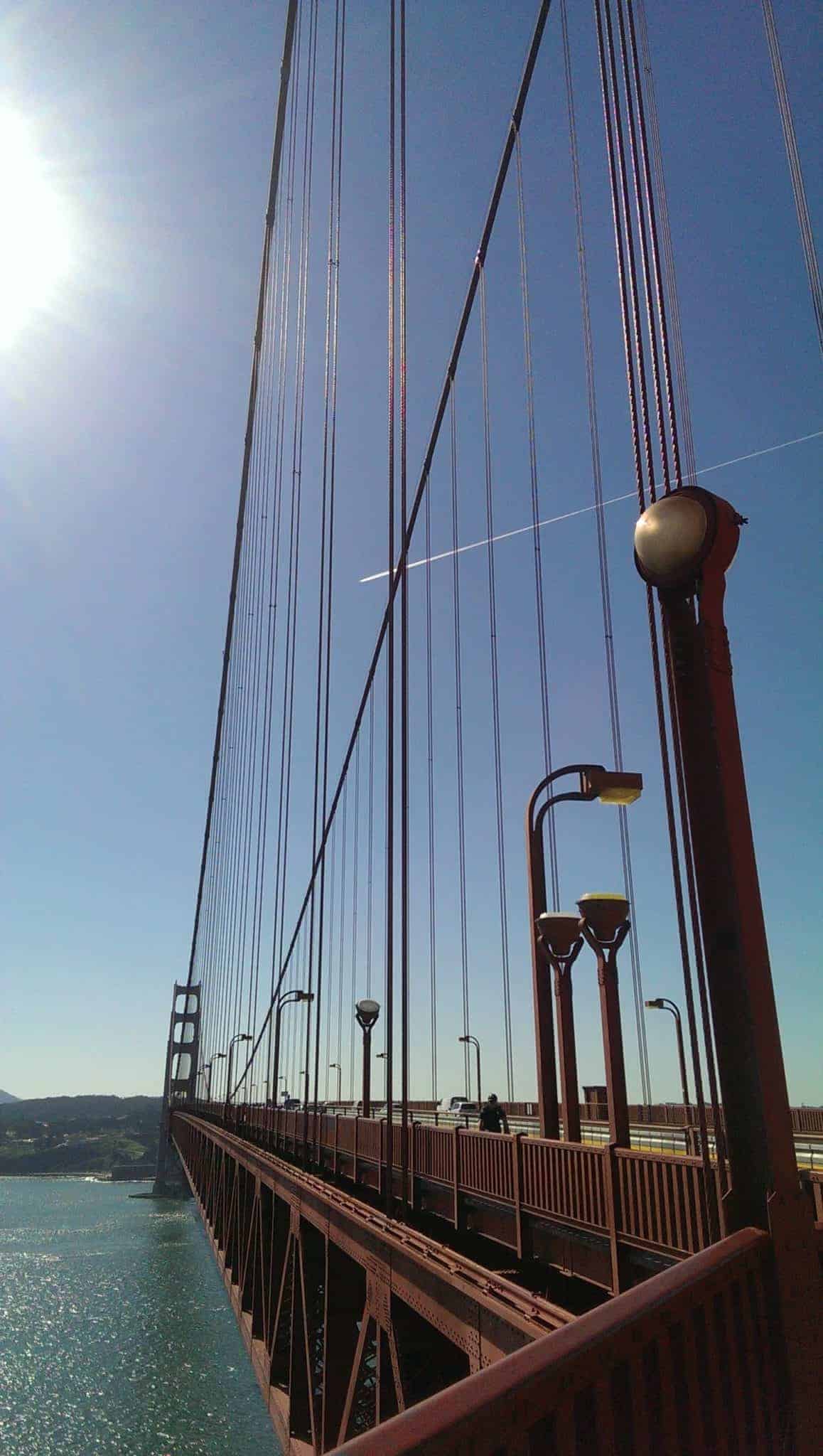
looking up at the cables of the Golden Gate Bridge
It is an impressive bridge.

The Asian Art Museum in San Francisco has a special exhibit on ukiyo-e, images of the floating world, so after a brisk walk across the Golden Gate Bridge and back, just to say I did, I made a visit. And I took pictures.

Art of the Ukiyo, the Floating World
road snaking through giant redwoods

Hiking the Redwoods

This entry is part 4 of 17 in the series GDB & Route 66

In an attempt to distract myself after returning Mindy, I used the next day to go over training homework and then I took myself hiking. And I made sure to find some sequoias, because we don’t have those at home.

two tiny lumberjacks beside enormous chestnut trees
the American Chestnut tree was typically enormous and grand

We used to have amazing trees in the Midwest, too. Accounts remain of nuts lying too thickly to reach through to the ground, and we have photos of trees with diameters of 12 and 15 feet. But we logged many of them before the lumbermen ever got to California. (The rest died when we imported non-native species, releasing the disastrous chestnut blight.)

Laura in hat before redwood bark, in selfie mode
My arm is just not long enough for a selfie with a redwood.

Midwestern conditions allowed our trees to reach incredible size in just a couple hundred years. The redwoods are much longer lived, though, a full four digits of years, which demands another level of respect.

Hiking the Redwoods
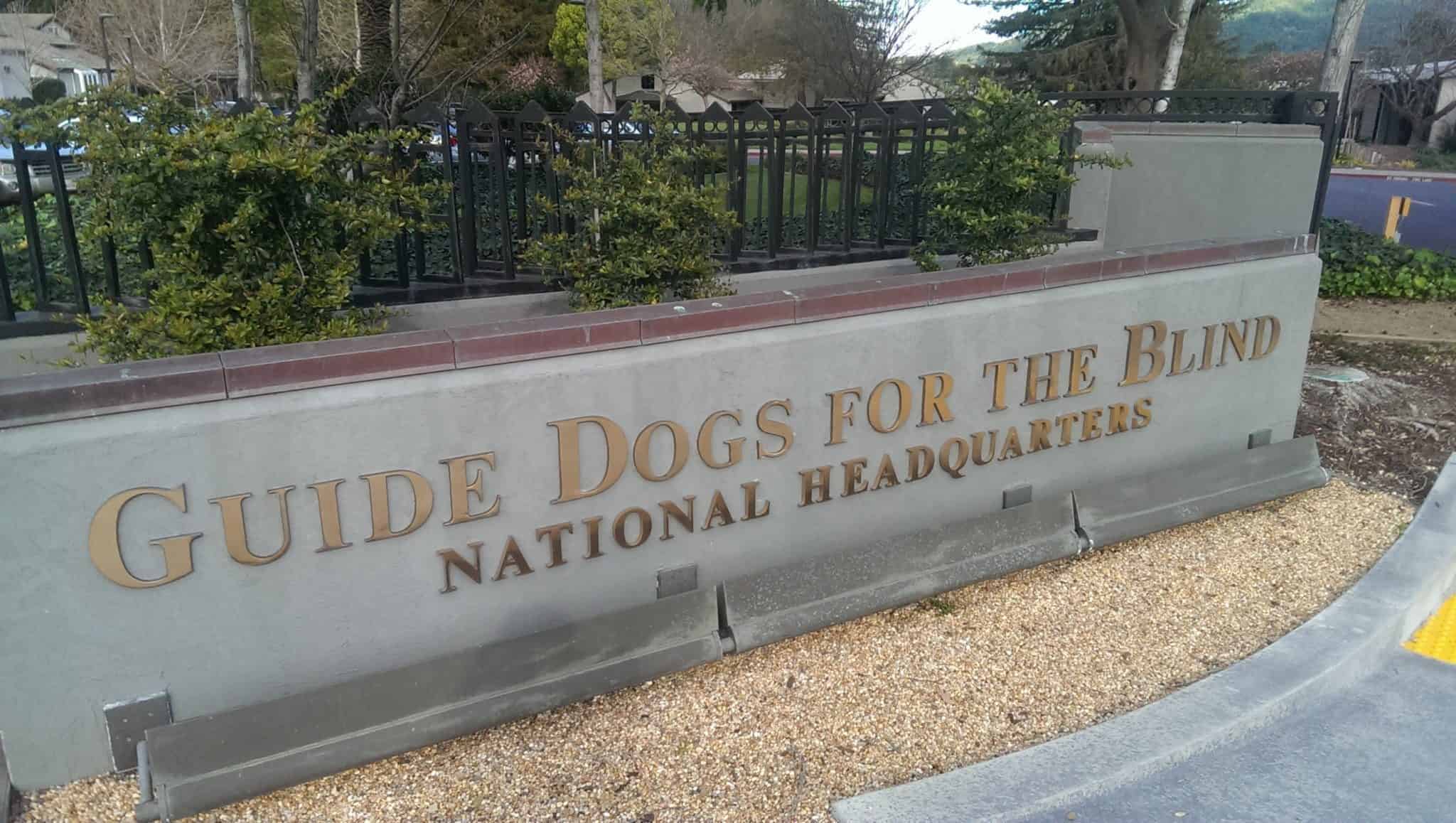
sign: "Guide Dogs for the Blind National Headquarters"

Goodbye to Mindy

This entry is part 3 of 17 in the series GDB & Route 66
sign: "Guide Dogs for the Blind National Headquarters"

Today was the day. I delivered Mindy to Guide Dogs for the Blind.

Mindy had done several kennel stays locally in the last two months, where I paid for extra playtime and stuffed Kongs and all the good things that would make her love staying in kennels, and indeed she was excited to enter the kennel lobby and trotted happily away with staff without ever looking back. This was important to me because I didn’t want her worrying about being left at GDB.

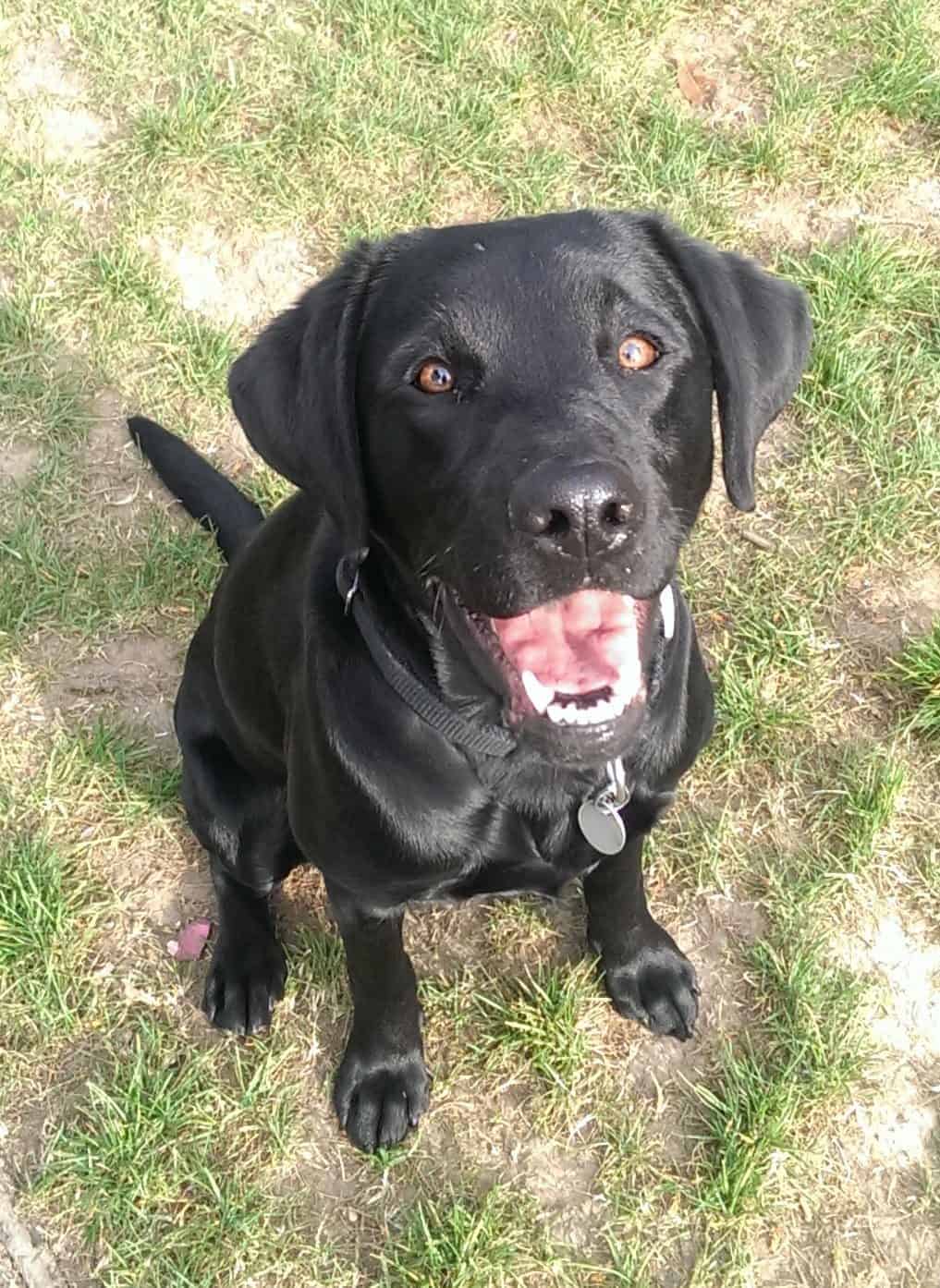
black Labrador Mindy smiling at camera
Just before turn-in.

It worked: today she sat for the GDB kennel worker to put on her leash, and then she went straight away with her, walking nicely, ears and tail up, sitting on cue. It was about as painless and stress-free as possible for her. (Me? I was doing fine until the GPS countdown hit single digits. Not gonna lie, I cried. But to be fair, I did more prep work for Mindy.)

Goodbye to Mindy
tabby cat looking at camera

“I Can Only Do This Once”

This entry is part 2 of 17 in the series GDB & Route 66
Portrait of a male tabby cat
Portrait of a male tabby cat (Photo credit: Wikipedia)

As I checked into my Winnemucca, NV motel last night, I asked if a service dog in training could stay for free like a working service dog, instead of me paying the pet fee. (She could.) Upon learning that I’m a professional trainer, the desk clerk realized that I obviously needed an education in what service animals do. (But if I’m a professional trainer there with a service dog in training, wouldn’t I probably already know what service animals… Never mind.) It included this exchange:

Clerk: “And there are even service cats! And do you know what they do? When a person is dying, a service cat is trained to get up on their chest and die with them.”

Me: “Um. /awkward blinky moment/ But they can only do that once.”

Clerk: “Right. But it happens.”

“I Can Only Do This Once”